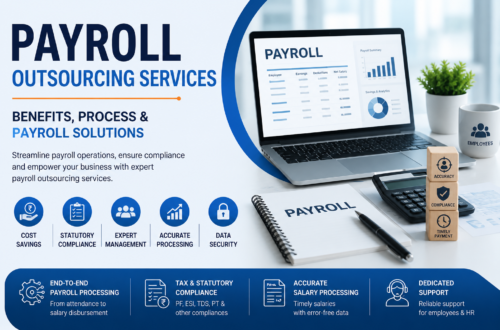
Payroll management is one of the most critical business functions for every organisation, regardless of its size or industry. Whether you operate a small startup with ten employees or a multinational company employing thousands of professionals across the United Kingdom, ensuring employees are paid accurately and on time is essential for maintaining workforce satisfaction, legal compliance, and smooth business operations. However, payroll administration has evolved far beyond simply calculating monthly salaries. Modern payroll requires businesses to manage PAYE tax calculations, National Insurance contributions, workplace pensions, statutory payments, overtime, bonuses, employee benefits, HMRC reporting, Real Time Information (RTI) submissions, GDPR compliance, and ever-changing UK employment legislation.
For many businesses across London, handling payroll internally has become increasingly expensive, time-consuming, and resource-intensive. Human resource departments often spend countless hours reconciling payroll data, correcting calculation errors, responding to employee payroll queries, updating tax codes, preparing statutory reports, and ensuring compliance with HMRC regulations. Even a minor payroll mistake can result in financial penalties, employee dissatisfaction, compliance investigations, and damage to an organisation’s reputation.
This is why an increasing number of organisations are partnering with the best payroll outsourcing companies in London. Professional payroll providers offer comprehensive payroll solutions designed to reduce administrative workload, improve payroll accuracy, strengthen compliance, and allow business owners to focus on strategic growth rather than payroll administration. From technology startups and recruitment agencies to healthcare providers, construction firms, retail chains, financial institutions, hospitality businesses, educational organisations, and manufacturing companies, payroll outsourcing has become a strategic investment that delivers measurable operational and financial benefits.
In this comprehensive guide, we explore everything you need to know about payroll outsourcing in London, including its benefits, available services, industry applications, compliance requirements, pricing considerations, and how to choose the right payroll partner for your organisation.
- Payroll Outsourcing Companies London
- Payroll Services London
- Payroll Bureau London
- Outsourced Payroll Services UK
- Payroll Management Services London
- SME Payroll Services London
- Business Payroll Solutions London
- Payroll Provider London
- Payroll Processing Services London
- PAYE Payroll Services London
- HMRC Payroll Services London
- Cloud Payroll Solutions London
- Payroll Administration Services London
- Payroll Software UK
- Payroll Company London
- HR and Payroll Outsourcing London
- Payroll Compliance UK
- Contractor Payroll Services London
- Recruitment Payroll Solutions London
- Payroll Services for Small Businesses London
What is Payroll Outsourcing?
Payroll outsourcing is the process of transferring payroll responsibilities to a specialist third-party payroll service provider. Instead of maintaining an in-house payroll department responsible for salary calculations, tax deductions, pension contributions, statutory payments, employee payslips, payroll reporting, and HMRC submissions, businesses rely on experienced payroll professionals who use advanced payroll software and compliance expertise to manage the entire payroll process efficiently.
Payroll outsourcing providers become an extension of your finance or HR department, ensuring that every employee receives the correct salary at the right time while complying with all applicable UK payroll legislation. Businesses can choose fully managed payroll services, where every aspect of payroll administration is outsourced, or partially managed services, where only specific payroll functions are delegated.
Modern payroll outsourcing companies offer cloud-based payroll platforms that integrate seamlessly with accounting software, HR management systems, attendance tracking tools, timesheet applications, pension providers, and employee self-service portals. These integrated solutions eliminate repetitive manual work, improve reporting accuracy, and simplify payroll management for businesses of every size.
As businesses continue embracing digital transformation, payroll outsourcing has become far more than an administrative convenience. It is now considered an essential business strategy for improving operational efficiency, reducing costs, and ensuring long-term compliance with increasingly complex payroll regulations.
Australia Birmingham Bristol Cambridge Canada Edinburgh France Germany HRMS HR Payroll HR Technology India Ireland Leeds London Manchester Netherlands Norway Nottingham Oxford Payroll Careers Payroll Compliance Payroll Jobs Payroll Management Payroll Outsourcing Payroll Services Poland Reading Salary Processing Singapore Sweden Switzerland Tax Compliance UAE UK USA
Why Payroll Outsourcing is Growing Rapidly in London
London is one of the world’s largest financial and commercial centres, home to thousands of startups, multinational corporations, technology companies, healthcare organisations, recruitment agencies, retailers, logistics providers, educational institutions, legal firms, and professional service companies. The city’s highly competitive business environment requires organisations to operate efficiently while maintaining strict compliance with employment regulations.
Managing payroll internally has become increasingly challenging due to changing tax legislation, evolving employment laws, pension regulations, and increased expectations for digital payroll services. Business owners are recognising that maintaining an internal payroll team often requires significant investment in specialist staff, payroll software, compliance training, IT infrastructure, cybersecurity, and ongoing legislative monitoring.
Professional payroll outsourcing companies help organisations overcome these challenges by delivering specialised expertise without the overhead costs associated with maintaining an internal payroll department. Instead of recruiting payroll administrators, investing in expensive payroll software licences, and monitoring regulatory updates, businesses can access experienced payroll professionals who manage these responsibilities every day.
The growth of remote work, hybrid employment models, international recruitment, contractor hiring, flexible working arrangements, and digital payroll technologies has further increased demand for outsourced payroll services. Companies operating across multiple locations often require scalable payroll systems capable of processing different employee categories while maintaining complete compliance with HMRC regulations. Payroll outsourcing providers offer this scalability, enabling businesses to expand confidently without worrying about payroll administration becoming a bottleneck.
Why Businesses Choose Payroll Outsourcing Companies
Business owners frequently underestimate the amount of time required to process payroll accurately. Payroll administration involves collecting employee attendance data, calculating salaries, processing overtime, applying tax deductions, updating pension contributions, preparing employee payslips, submitting RTI reports to HMRC, reconciling payroll accounts, maintaining payroll records, responding to employee enquiries, and generating financial reports. Every payroll cycle requires meticulous attention to detail.
By outsourcing payroll, organisations eliminate these repetitive administrative tasks while gaining access to payroll specialists who understand current legislation and best practices. This enables HR departments to concentrate on recruitment, employee engagement, talent development, workforce planning, performance management, and organisational growth rather than spending valuable time processing payroll.
Outsourced payroll providers also invest heavily in advanced payroll technology, automation, cybersecurity, and compliance monitoring. Businesses benefit from enterprise-level payroll systems without purchasing expensive software or maintaining dedicated payroll infrastructure. Automatic payroll calculations, digital payslips, cloud reporting, secure employee portals, automated tax updates, and integrated accounting systems significantly improve efficiency while reducing payroll processing time.
Another significant advantage is business continuity. Internal payroll departments may face disruption due to employee absence, annual leave, illness, or staff turnover. Payroll outsourcing providers maintain dedicated teams that ensure payroll processing continues without interruption, guaranteeing employees receive their salaries on schedule regardless of internal staffing challenges.
Key Benefits of Payroll Outsourcing
One of the most valuable advantages of payroll outsourcing is cost efficiency. Maintaining an internal payroll department requires payroll managers, administrators, compliance specialists, software licences, IT infrastructure, ongoing employee training, cybersecurity measures, and system maintenance. These costs increase significantly as businesses grow. Outsourcing converts these fixed operational costs into predictable service fees, allowing organisations to manage budgets more effectively.
Payroll outsourcing also dramatically improves accuracy. Payroll professionals use sophisticated software with automated calculations that minimise human error. Accurate salary processing reduces employee complaints, eliminates payroll discrepancies, and helps businesses maintain positive workplace relationships.
Another major benefit is regulatory compliance. HMRC requirements frequently change, and businesses must continually update payroll systems to reflect new tax codes, National Insurance thresholds, statutory payment regulations, pension contribution rates, and employment legislation. Payroll outsourcing companies monitor these legislative changes continuously, ensuring payroll remains fully compliant throughout the year.
Security is equally important. Payroll records contain sensitive employee information, including salaries, tax identifiers, bank details, addresses, and National Insurance numbers. Leading payroll providers use encrypted cloud platforms, secure databases, multi-factor authentication, GDPR-compliant storage, and advanced cybersecurity measures to protect confidential payroll information from unauthorised access or data breaches.
Payroll outsourcing also improves decision-making through advanced reporting capabilities. Modern payroll systems generate comprehensive reports covering labour costs, tax liabilities, pension contributions, overtime expenses, departmental payroll analysis, workforce trends, and payroll forecasting. These insights enable business leaders to make informed financial and workforce planning decisions based on accurate payroll data.
Finally, payroll outsourcing provides exceptional scalability. Whether a company hires five new employees or expands into multiple UK locations, payroll providers can easily accommodate workforce growth without disrupting existing payroll operations. This flexibility makes payroll outsourcing particularly valuable for startups, high-growth businesses, recruitment agencies, and organisations undergoing rapid expansion.
Complete Payroll Services Offered by Payroll Outsourcing Companies in London
One of the biggest reasons businesses partner with professional payroll outsourcing companies is the wide range of payroll services they provide. Modern payroll providers do much more than calculate employee salaries. They deliver comprehensive payroll management solutions that integrate finance, human resources, compliance, taxation, pension administration, statutory reporting, and employee self-service into one streamlined process.
Whether your organisation employs five people or five thousand, payroll outsourcing companies can tailor their services to meet your workforce requirements. Most providers offer flexible payroll packages that support startups, small businesses, medium-sized enterprises, recruitment agencies, healthcare providers, retailers, manufacturing companies, financial institutions, educational organisations, charities, logistics firms, hospitality businesses, and multinational corporations operating throughout London and the wider United Kingdom.
Instead of maintaining multiple payroll systems or hiring several payroll administrators, businesses gain access to a dedicated payroll team responsible for every stage of payroll processing. This not only improves efficiency but also reduces payroll errors, strengthens compliance, and enhances employee satisfaction.
Professional payroll providers usually offer the following services as part of a complete payroll outsourcing solution.
Monthly Payroll Processing
Monthly payroll remains the most common payroll cycle across UK businesses. Every month, payroll providers calculate employee gross salaries, overtime payments, commissions, bonuses, tax deductions, National Insurance contributions, pension contributions, student loan repayments, salary sacrifice arrangements, and statutory deductions before producing accurate net salary payments.
Each payroll cycle includes extensive validation checks to ensure employee records remain accurate before salaries are processed. Payroll specialists verify attendance information, contractual changes, new joiners, employee resignations, salary revisions, promotions, unpaid leave, holiday pay adjustments, and expense reimbursements. This careful verification process significantly reduces payroll discrepancies while ensuring employees receive accurate salary payments every pay period.
Monthly payroll services also include employee payslip generation, payroll journals, bank payment files, payroll reports, employer liability summaries, pension reports, HMRC submissions, and year-to-date payroll tracking.
Weekly Payroll Services
Certain industries require weekly payroll rather than monthly salary processing. Recruitment agencies, construction companies, logistics businesses, manufacturing organisations, cleaning contractors, hospitality providers, healthcare staffing agencies, and temporary workforce providers frequently operate weekly payroll cycles due to the nature of their workforce.
Weekly payroll requires significantly more administrative work because payroll calculations, tax deductions, pension contributions, overtime calculations, holiday accruals, and payslip generation occur every week. Professional payroll outsourcing companies automate these repetitive tasks using advanced payroll software integrated with attendance systems and timesheet management platforms.
Weekly payroll outsourcing ensures temporary workers, contract employees, seasonal staff, and agency workers receive timely payments while employers maintain full compliance with UK payroll legislation.
PAYE Administration
Pay As You Earn (PAYE) forms the foundation of UK payroll taxation. Every employer must calculate income tax accurately according to employee tax codes while deducting National Insurance contributions and submitting payroll information to HMRC.
Payroll outsourcing companies manage the complete PAYE process, including:
- Employee tax code management
- Income tax calculations
- National Insurance deductions
- HMRC reporting
- Tax code updates
- Student loan deductions
- Apprentice levy calculations
- Payroll reconciliations
- Tax adjustments
- Year-end PAYE reporting
Professional payroll specialists continuously monitor HMRC updates to ensure payroll calculations remain compliant throughout the financial year.
Pension Auto-Enrolment
Workplace pension legislation has introduced additional responsibilities for UK employers. Every eligible employee must be automatically enrolled into a qualifying workplace pension scheme while employers calculate both employee and employer pension contributions accurately.
Payroll outsourcing companies manage every aspect of pension administration, including employee eligibility assessments, pension enrolment, contribution calculations, pension provider reporting, opt-in requests, opt-out requests, re-enrolment requirements, and pension compliance reporting.
Businesses therefore avoid complicated pension administration while ensuring complete compliance with workplace pension legislation.
Real Time Information (RTI) Submissions
HMRC requires employers to submit payroll information through the Real Time Information (RTI) system whenever employees are paid. These submissions include salary payments, tax deductions, National Insurance contributions, statutory payments, pension contributions, and payroll adjustments.
Missing submission deadlines or submitting inaccurate payroll information may result in financial penalties and compliance investigations.
Professional payroll outsourcing companies automatically prepare and submit RTI reports on behalf of employers, ensuring payroll information reaches HMRC accurately and on time every payroll cycle.
Employee Payslip Management
Employees expect instant access to accurate payroll information. Modern payroll outsourcing providers generate professional digital payslips that include detailed salary breakdowns, tax deductions, National Insurance contributions, pension contributions, overtime payments, bonuses, commissions, statutory payments, and year-to-date earnings.
Most providers offer secure employee self-service portals where employees can download current and historical payslips at any time without contacting HR departments. These portals improve employee satisfaction while significantly reducing payroll-related enquiries.
Statutory Payroll Services
Payroll outsourcing providers also manage statutory employee payments, including:
- Statutory Sick Pay (SSP)
- Statutory Maternity Pay (SMP)
- Statutory Paternity Pay (SPP)
- Statutory Adoption Pay (SAP)
- Shared Parental Pay (ShPP)
- Bereavement Leave Payments
- Redundancy Payment Calculations
Managing statutory payments requires specialist payroll knowledge because eligibility criteria, payment durations, employer recovery rules, and reporting obligations frequently change. Outsourcing these responsibilities reduces compliance risks while ensuring employees receive statutory benefits correctly.
Industries That Benefit from Payroll Outsourcing
Payroll outsourcing has become increasingly popular across nearly every industry operating in London because payroll complexity varies significantly between sectors. Professional payroll providers understand industry-specific payroll requirements and customise payroll services accordingly.
Information Technology Companies
Technology businesses often employ permanent staff, contract developers, remote employees, consultants, freelancers, and international workers. Payroll outsourcing companies help IT organisations manage flexible employment structures while maintaining compliance with UK payroll regulations. As technology companies continue expanding rapidly across London, outsourced payroll provides the scalability needed to support workforce growth without increasing internal administrative burdens.
Recruitment Agencies
Recruitment agencies process payroll for temporary workers, contract employees, agency staff, and permanent placements every week. Managing contractor payments, holiday accruals, pension contributions, timesheets, and tax deductions requires specialised payroll expertise. Outsourcing payroll allows recruitment consultants to focus on candidate sourcing and client acquisition while payroll professionals manage contractor payments accurately and efficiently.
Healthcare Organisations
Hospitals, private clinics, care homes, nursing agencies, pharmacies, and healthcare recruitment firms often employ large numbers of shift workers with varying overtime, allowances, statutory payments, and pension contributions. Payroll outsourcing simplifies workforce management while ensuring healthcare employees receive accurate and timely salary payments.
Construction Companies
Construction businesses regularly manage subcontractors, site workers, engineers, project managers, and temporary labour across multiple projects. Payroll outsourcing providers support CIS payroll, contractor payments, timesheet processing, tax deductions, and payroll compliance while reducing administrative complexity for construction firms.
Retail Businesses
Retail organisations frequently employ seasonal staff, part-time employees, weekend workers, and shift-based teams. Payroll outsourcing providers automate overtime calculations, holiday pay, employee scheduling integration, and payroll reporting while helping retailers maintain operational efficiency during busy trading periods.
Manufacturing Companies
Manufacturing businesses often employ hundreds of production workers across rotating shifts, overtime schedules, incentive programmes, and performance bonuses. Outsourced payroll solutions simplify workforce administration while generating detailed payroll analytics that support budgeting and labour cost management.
Hospitality Businesses
Hotels, restaurants, catering companies, event management firms, pubs, cafés, and entertainment venues often experience fluctuating staffing requirements throughout the year. Payroll outsourcing helps hospitality organisations manage seasonal workforce changes while processing tips, overtime, shift allowances, bonuses, and statutory payments efficiently.
Cloud Payroll Solutions
Cloud technology has transformed payroll management across the UK. Traditional payroll systems relied on desktop software, spreadsheets, manual backups, and locally stored employee records. Modern cloud payroll platforms offer far greater flexibility, security, automation, and accessibility.
Cloud payroll enables HR managers, payroll administrators, finance departments, and employees to access payroll information securely from any location using encrypted online systems. This has become especially valuable as hybrid working and remote employment continue growing across London.
Cloud payroll platforms automatically update tax rules, pension contribution rates, statutory payment calculations, and payroll legislation. Businesses therefore avoid installing software updates manually while remaining compliant with current regulations.
Advanced cloud payroll systems also provide automated payroll reporting, digital payslips, employee portals, mobile payroll access, approval workflows, audit trails, document storage, and integration with accounting software, significantly improving payroll efficiency.
Payroll Software Integration
Modern payroll outsourcing companies support integration with leading business software platforms, enabling seamless information sharing across payroll, finance, and HR departments.
Common integrations include:
- Sage Payroll
- Sage Accounting
- Xero
- QuickBooks
- Microsoft Dynamics 365
- Oracle ERP
- SAP SuccessFactors
- Workday
- BambooHR
- BrightHR
- Deputy
- Microsoft Excel
- Attendance Management Systems
- Time Tracking Software
- Biometric Attendance Devices
Software integration eliminates duplicate data entry, reduces manual errors, accelerates payroll processing, improves financial reporting accuracy, and creates a more efficient business ecosystem.
Why Recruitment Agencies Prefer Payroll Outsourcing
Recruitment agencies face unique payroll challenges due to contractor management, weekly payroll cycles, timesheet approvals, client invoicing, and temporary staffing requirements. Outsourcing payroll allows agencies to process thousands of contractor payments efficiently while maintaining compliance with PAYE, pension legislation, and employment regulations.
Professional payroll providers also assist with umbrella payroll, CIS payroll, holiday pay calculations, pension administration, contractor onboarding, payroll reporting, and HMRC submissions. This comprehensive support enables recruitment businesses to scale operations without expanding internal payroll departments.
How to Choose the Best Payroll Outsourcing Company in London
Selecting the right payroll outsourcing company is one of the most important business decisions an organisation can make. Payroll affects every employee within the company, directly influencing employee satisfaction, legal compliance, financial reporting, and business operations. A reliable payroll provider not only ensures that salaries are paid accurately and on time but also helps businesses remain compliant with constantly changing UK payroll legislation.
With hundreds of payroll service providers operating across London, businesses should evaluate each provider carefully before signing a service agreement. Rather than choosing a provider solely based on pricing, organisations should consider experience, compliance expertise, technology, scalability, customer support, industry knowledge, security standards, reporting capabilities, and integration options.
The ideal payroll outsourcing partner should act as an extension of your HR and finance teams by delivering proactive payroll advice, responding quickly to payroll enquiries, and helping your organisation adapt to future business growth.
Below are some of the most important factors every business should evaluate when selecting a payroll outsourcing company.
Industry Experience and Payroll Expertise
Payroll legislation changes regularly, making experience one of the most valuable qualities in a payroll provider. Companies with years of payroll experience understand the complexities of UK employment law, PAYE regulations, National Insurance calculations, pension administration, statutory payments, employee classifications, contractor payroll, and HMRC reporting.
Experienced payroll specialists are better equipped to handle unusual payroll situations, including salary adjustments, redundancy payments, bonuses, commissions, backdated salary revisions, employee transfers, international assignments, and tax code corrections. Their knowledge helps businesses avoid costly payroll mistakes while ensuring payroll operations continue smoothly throughout the year.
Businesses should also ask whether the payroll provider has experience within their industry. Recruitment agencies, healthcare providers, construction companies, retailers, manufacturers, hospitality businesses, and technology firms all have unique payroll requirements that benefit from industry-specific expertise.
HMRC and Regulatory Compliance
Compliance is one of the primary reasons organisations outsource payroll. Payroll providers should maintain complete compliance with HMRC requirements, employment legislation, pension regulations, National Insurance rules, statutory payment obligations, and GDPR data protection standards.
A professional payroll company continuously monitors changes in tax legislation and updates payroll systems accordingly. This proactive approach protects businesses from penalties, payroll audits, inaccurate tax calculations, and missed submission deadlines.
Before choosing a payroll provider, businesses should confirm how legislative updates are managed, how payroll calculations are verified, and what compliance monitoring procedures are in place.
Payroll Technology and Automation
Modern payroll relies heavily on technology. Businesses should look for providers that use advanced cloud-based payroll systems capable of automating payroll calculations, tax deductions, pension contributions, statutory payments, employee reporting, and HMRC submissions.
Automation significantly reduces manual processing while improving payroll accuracy. Advanced payroll software also provides real-time dashboards, payroll analytics, automated approval workflows, employee self-service portals, secure document storage, mobile accessibility, and digital reporting.
Technology also improves payroll scalability. As businesses recruit additional employees, cloud payroll platforms can process larger payroll volumes without requiring additional administrative staff.
Customer Support and Dedicated Payroll Specialists
Payroll questions often require immediate responses. Employees may enquire about salary calculations, tax deductions, pension contributions, overtime payments, holiday pay, statutory leave, or payroll corrections. Businesses therefore benefit from payroll providers offering responsive customer support.
Many leading payroll outsourcing companies assign a dedicated payroll manager who understands the client’s business, payroll structure, reporting requirements, and workforce policies. Having a consistent point of contact improves communication while ensuring payroll issues are resolved quickly.
Businesses should enquire about service level agreements, support availability, emergency payroll procedures, response times, and escalation processes before selecting a payroll partner.
Payroll Outsourcing Pricing in London
One of the most frequently asked questions from business owners is how much payroll outsourcing costs. The answer depends on several factors, including the number of employees, payroll frequency, reporting requirements, pension administration, software integrations, and additional HR services.
Most payroll providers offer flexible pricing models designed to accommodate businesses of different sizes. Common pricing structures include fixed monthly fees, per-employee pricing, customised enterprise packages, or hybrid billing models.
Small businesses with fewer employees generally benefit from affordable monthly payroll packages, while larger organisations requiring complex payroll processing, multiple payroll cycles, international employees, contractor management, and customised reporting typically require tailored pricing.
Although outsourcing payroll involves service fees, organisations often achieve significant long-term savings by eliminating internal payroll salaries, software licensing costs, infrastructure expenses, compliance training, payroll system maintenance, and recruitment costs associated with building an internal payroll department.
When evaluating pricing, businesses should consider overall value rather than simply selecting the lowest-cost provider. A slightly higher service fee may provide superior compliance, technology, reporting, customer support, and payroll accuracy, ultimately reducing business risk and administrative costs.
In-House Payroll vs Payroll Outsourcing
Many organisations initially process payroll internally before eventually transitioning to outsourced payroll as their workforce grows. Comparing these two approaches highlights why outsourcing has become increasingly popular among London businesses.
In-House Payroll
Managing payroll internally gives organisations direct control over payroll processing, employee records, and payroll schedules. However, maintaining an internal payroll department requires experienced payroll professionals, payroll software, compliance training, cybersecurity measures, software updates, secure databases, and ongoing legislative monitoring.
Internal payroll teams also face challenges related to staff absences, annual leave, recruitment, employee turnover, and increasing payroll complexity as businesses expand.
Payroll Outsourcing
Payroll outsourcing transfers these responsibilities to experienced payroll professionals who process payroll using enterprise-grade systems and automated compliance monitoring. Businesses benefit from specialist expertise without recruiting payroll administrators or maintaining dedicated payroll infrastructure.
Outsourcing improves payroll accuracy, reduces compliance risks, lowers administrative costs, strengthens data security, and allows HR teams to focus on strategic workforce management instead of repetitive payroll administration.
For most growing organisations, payroll outsourcing provides greater flexibility, scalability, and long-term cost efficiency than maintaining an internal payroll department.
Common Payroll Mistakes Businesses Make
Payroll errors are more common than many organisations realise. Even experienced payroll administrators occasionally make mistakes due to changing legislation, manual calculations, incomplete employee records, or administrative oversights.
Common payroll mistakes include:
- Incorrect employee tax codes
- Missed overtime calculations
- Incorrect pension contributions
- Delayed HMRC submissions
- Inaccurate statutory payments
- Incorrect National Insurance deductions
- Payroll processing delays
- Employee classification errors
- Duplicate salary payments
- Incorrect holiday pay calculations
- Failure to update employee salary revisions
- Incorrect payroll reporting
Professional payroll outsourcing companies implement multiple verification procedures before payroll is finalised. Automated validation systems, payroll audits, compliance checks, and experienced payroll specialists significantly reduce these risks.
Payroll Outsourcing for Small and Medium Businesses
Small businesses often assume payroll outsourcing is only suitable for large corporations. In reality, SMEs frequently benefit the most from outsourced payroll because they usually lack dedicated payroll departments.
Business owners and office managers often process payroll alongside numerous other responsibilities, increasing the likelihood of payroll errors and compliance issues. Outsourcing payroll allows SMEs to access experienced payroll professionals at a fraction of the cost of employing an internal payroll specialist.
Payroll outsourcing also supports business growth. As SMEs recruit additional employees, payroll providers can easily accommodate expanding workforces without requiring businesses to purchase additional software or recruit payroll staff.
This enables entrepreneurs to concentrate on sales, customer service, marketing, product development, and business expansion while leaving payroll administration to specialists.
Payroll Outsourcing for Large Enterprises
Large organisations process complex payroll involving multiple departments, regional offices, shift workers, executives, contractors, international employees, performance bonuses, pension schemes, employee benefits, overtime, commissions, and statutory payments.
Enterprise payroll requires sophisticated reporting, automated approvals, secure integration with HR systems, financial reporting, audit trails, and workforce analytics.
Professional payroll outsourcing companies provide enterprise-grade payroll platforms capable of handling high payroll volumes while maintaining exceptional accuracy and compliance. Advanced reporting enables finance directors and HR leaders to analyse labour costs, overtime trends, departmental payroll expenditure, pension liabilities, and workforce planning metrics.
Outsourcing enterprise payroll also improves disaster recovery, business continuity, cybersecurity, and operational resilience.
Artificial Intelligence and the Future of Payroll
Artificial Intelligence is transforming payroll management by automating repetitive administrative tasks while improving payroll accuracy and decision-making.
Modern payroll platforms increasingly use AI-powered technology to identify payroll anomalies, detect duplicate payments, validate employee records, automate tax calculations, predict payroll expenses, generate compliance alerts, and improve workforce reporting.
Machine learning algorithms analyse payroll trends to identify unusual salary movements, overtime patterns, pension anomalies, or tax inconsistencies before payroll is processed. This proactive approach significantly reduces payroll errors while strengthening financial controls.
Over the coming years, AI is expected to automate many routine payroll activities, allowing payroll professionals to focus on strategic advisory services, workforce planning, compliance management, and employee experience rather than manual payroll processing.
Businesses adopting AI-enabled payroll solutions today are likely to achieve higher efficiency, lower processing costs, improved reporting, and greater payroll accuracy.
Return on Investment (ROI) of Payroll Outsourcing
Payroll outsourcing should not be viewed simply as an operational expense. It is an investment that delivers measurable financial returns through cost savings, improved compliance, reduced administrative workload, enhanced payroll accuracy, lower software costs, stronger data security, and increased employee satisfaction.
Businesses often recover outsourcing costs by eliminating payroll errors, reducing HMRC penalties, lowering administrative overhead, avoiding software investments, and improving workforce productivity. HR departments also gain valuable time that can be redirected toward recruitment, employee retention, training, and organisational development.
For organisations focused on sustainable growth, payroll outsourcing provides long-term operational efficiency while reducing payroll risks and supporting scalable business expansion.
What Makes the Best Payroll Outsourcing Companies in London Stand Out?
With hundreds of payroll service providers operating across London, businesses often ask what separates an average payroll provider from an exceptional one. While most companies offer payroll processing, the best payroll outsourcing companies deliver much more than salary calculations. They become long-term strategic partners that help organisations improve efficiency, maintain compliance, reduce operational costs, and support sustainable business growth.
Leading payroll providers invest heavily in technology, security, compliance expertise, automation, and customer support. They continuously update their payroll systems to reflect changes in HMRC legislation, National Insurance thresholds, workplace pension regulations, statutory payment rules, and employment law. Rather than simply processing payroll each month, they proactively identify payroll risks, recommend process improvements, and provide valuable insights that help businesses optimise workforce management.
Another distinguishing characteristic is flexibility. Every organisation has unique payroll requirements depending on its industry, workforce size, payroll frequency, employee benefits, bonus structures, contractor arrangements, and reporting needs. The best payroll providers customise their services instead of forcing businesses into standard payroll packages. This personalised approach ensures payroll solutions remain aligned with business objectives while supporting future expansion.
Customer service also plays a vital role. Payroll affects every employee, making prompt support essential whenever payroll questions arise. Professional payroll outsourcing companies assign experienced payroll managers who understand each client’s business, respond quickly to payroll queries, and provide ongoing guidance whenever legislative changes occur. Businesses benefit from knowing experienced professionals are always available to resolve payroll issues efficiently.
Why London Businesses Continue to Outsource Payroll
Payroll outsourcing has become increasingly popular across London because businesses are focusing on operational efficiency, cost control, and strategic growth. Rather than investing substantial resources into maintaining internal payroll departments, organisations recognise that outsourcing allows them to access experienced payroll specialists without increasing overhead costs.
London’s business environment is highly competitive. Companies must remain agile while adapting quickly to changing market conditions, employment regulations, workforce expectations, and technological innovation. Outsourcing payroll enables organisations to redirect valuable resources toward revenue-generating activities such as sales, customer service, recruitment, digital transformation, research, and business expansion.
Small businesses appreciate payroll outsourcing because it removes administrative complexity without requiring significant investment. Medium-sized enterprises benefit from scalable payroll systems capable of supporting workforce growth, while large corporations rely on enterprise payroll platforms that integrate seamlessly with HR, finance, and accounting systems.
The increasing adoption of hybrid working, remote employment, flexible staffing models, contractor engagement, and cloud technology has further accelerated payroll outsourcing across London. Businesses require payroll systems capable of supporting diverse workforces while maintaining complete compliance with UK employment legislation. Professional payroll providers deliver exactly this combination of flexibility, expertise, and technology.
Business Case Study – How Payroll Outsourcing Improved Operational Efficiency
Consider a rapidly growing technology company in London employing approximately eighty software developers, project managers, sales executives, customer support specialists, and administrative staff. Initially, payroll was managed internally by the finance department using desktop payroll software and spreadsheets.
As the organisation expanded, payroll became increasingly time-consuming. Salary revisions, overtime calculations, employee bonuses, pension contributions, statutory payments, contractor invoices, and HMRC reporting required significant manual effort each month. Payroll processing frequently occupied several working days, leaving finance staff with less time for budgeting, forecasting, and financial planning.
The company decided to partner with a professional payroll outsourcing provider. Employee information was securely migrated to a cloud-based payroll platform integrated with the organisation’s accounting software and HR management system.
Within the first few months, payroll processing time reduced dramatically. Automated payroll calculations eliminated repetitive manual work, digital employee self-service portals reduced HR enquiries, and integrated payroll reporting improved financial visibility. Most importantly, the finance department regained valuable time to focus on strategic business initiatives while payroll specialists handled legislative updates, HMRC submissions, pension administration, statutory payments, and payroll compliance.
Although every organisation differs, this example demonstrates how payroll outsourcing often delivers operational improvements that extend well beyond simple cost savings.
Emerging Payroll Trends in 2026 and Beyond
The payroll industry continues evolving rapidly as businesses adopt automation, artificial intelligence, cloud computing, and integrated workforce management solutions. Organisations selecting payroll outsourcing companies today should consider providers capable of supporting future technological developments rather than focusing solely on current payroll requirements.
Several key trends are shaping the future of payroll outsourcing across London.
Artificial Intelligence
Artificial intelligence is increasingly being used to identify payroll anomalies, validate employee information, automate compliance monitoring, detect duplicate payments, predict payroll costs, and generate workforce analytics.
Cloud Payroll Platforms
Cloud payroll continues replacing traditional desktop software by providing secure online access, automatic software updates, encrypted data storage, mobile accessibility, and seamless software integration.
Employee Self-Service
Employees increasingly expect instant access to digital payslips, tax documents, pension information, payroll history, and employment records through secure online portals.
Integrated HR and Payroll Systems
Businesses prefer integrated platforms where recruitment, onboarding, attendance management, leave management, payroll processing, performance management, and reporting operate within a unified system.
Payroll Analytics
Advanced reporting allows organisations to analyse labour costs, overtime expenditure, departmental payroll budgets, pension liabilities, workforce productivity, and financial forecasting using real-time payroll data.
Businesses partnering with innovative payroll outsourcing companies position themselves to benefit from these technological advancements while maintaining long-term payroll efficiency.
Frequently Asked Questions (FAQs)
1. What is payroll outsourcing?
Payroll outsourcing is the process of hiring a specialist payroll provider to manage employee salary processing, tax deductions, pension administration, HMRC submissions, statutory payments, payroll reporting, and compliance on behalf of a business.
2. Is payroll outsourcing suitable for small businesses?
Yes. Small businesses often benefit significantly because outsourcing eliminates the need for dedicated payroll staff while ensuring accurate payroll processing and regulatory compliance.
3. How much does payroll outsourcing cost in London?
Costs depend on workforce size, payroll frequency, reporting requirements, software integrations, pension administration, and additional HR services. Most providers offer customised pricing based on business needs.
4. Can payroll providers manage HMRC submissions?
Yes. Professional payroll companies prepare and submit Real Time Information (RTI) reports directly to HMRC, helping businesses remain compliant with UK payroll legislation.
5. Do payroll companies handle workplace pensions?
Most payroll providers manage pension auto-enrolment, contribution calculations, pension reporting, employee enrolment, opt-outs, and re-enrolment requirements.
6. Is payroll outsourcing secure?
Leading payroll providers use encrypted cloud infrastructure, GDPR-compliant systems, multi-factor authentication, secure employee portals, and advanced cybersecurity measures to protect confidential payroll data.
7. Can outsourced payroll integrate with accounting software?
Yes. Most payroll providers integrate with Xero, Sage, QuickBooks, Microsoft Dynamics, Oracle, SAP, and other accounting or ERP platforms.
8. Can payroll outsourcing support recruitment agencies?
Absolutely. Recruitment agencies frequently outsource payroll for temporary workers, contractors, umbrella payroll, and weekly payroll processing.
9. What industries benefit from payroll outsourcing?
Technology, healthcare, manufacturing, retail, hospitality, education, logistics, finance, construction, recruitment, professional services, charities, and many other industries benefit from outsourced payroll.
10. Can payroll providers scale with business growth?
Yes. Professional payroll companies are designed to support growing workforces without requiring businesses to recruit additional payroll administrators.
Payroll Administration Services London
Payroll has evolved into one of the most complex and compliance-driven functions within modern businesses. Managing salaries, PAYE, National Insurance, pensions, statutory payments, HMRC reporting, employee records, and payroll legislation internally can consume significant time and resources while increasing the risk of costly errors.
Partnering with one of the best payroll outsourcing companies in London enables businesses to simplify payroll administration, improve compliance, reduce operational costs, strengthen payroll security, and provide employees with accurate, timely salary payments. Whether you operate a startup, small business, recruitment agency, healthcare organisation, retailer, manufacturer, financial institution, or multinational corporation, outsourcing payroll allows your internal teams to focus on innovation, customer service, business development, and long-term growth instead of administrative payroll tasks.
As cloud technology, artificial intelligence, automation, and integrated workforce management continue transforming payroll services, businesses that invest in professional payroll outsourcing today will be better positioned for future growth, regulatory compliance, and operational excellence.
If you are evaluating payroll providers, focus on expertise, compliance, technology, scalability, customer support, data security, and industry experience rather than price alone. Choosing the right payroll partner can significantly improve business efficiency while giving you confidence that one of your most important business functions is managed accurately and professionally.