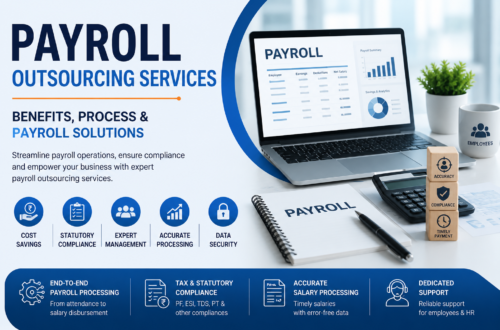
Payroll Outsourcing: Complete Guide for Job Seekers, Employers, and HR Professionals
Payroll Outsourcing: Everything You Need to Know
Payroll outsourcing has become one of the fastest-growing HR services across the world. Businesses of every size—from startups to multinational corporations—are choosing professional payroll outsourcing providers to simplify salary processing, ensure statutory compliance, and improve employee satisfaction.
For job seekers, understanding payroll outsourcing is equally important. Many companies today hire employees through staffing agencies or third-party payroll providers. Knowing how outsourced payroll works helps candidates evaluate job offers, understand salary structures, and make informed career decisions.
This comprehensive guide explains payroll outsourcing, its benefits, salary processing, statutory compliance, payroll software, HR technology, and future career opportunities in payroll management.
What Is Payroll Outsourcing?
Payroll outsourcing is the process of hiring an external company to manage employee payroll and related HR functions. Instead of maintaining a large internal payroll department, organizations rely on payroll experts to calculate salaries, deduct taxes, manage compliance, generate payslips, and transfer employee salaries accurately and on time.
A payroll outsourcing company typically manages:
- Salary calculation
- Employee payslips
- Income tax deductions
- Provident Fund (PF)
- Employee State Insurance (ESI)
- Professional Tax
- Leave and attendance processing
- Bonus and incentive calculations
- Full and Final (FnF) settlements
- Payroll reporting
- Government compliance
This allows businesses to focus on growth while payroll specialists handle complex administrative tasks.
Why Companies Prefer Payroll Outsourcing
Payroll processing involves strict compliance with labor laws, taxation rules, and government regulations. Even small mistakes can lead to penalties, employee dissatisfaction, or legal issues.
Payroll outsourcing helps companies:
- Reduce payroll processing errors
- Save operational costs
- Improve compliance
- Ensure timely salary payments
- Increase payroll accuracy
- Protect employee payroll data
- Reduce HR workload
- Improve reporting and analytics
- Handle large workforces efficiently
Large organizations processing thousands of salaries every month often rely on outsourced payroll solutions to improve efficiency.
Benefits of Payroll Outsourcing for Job Seekers
Many candidates hesitate when they hear that employment is “on third-party payroll.” However, payroll outsourcing is a common and legitimate employment model used by many reputable companies.
Benefits include:
- Timely salary credit
- Professional payroll management
- Proper PF and ESI contributions
- Tax deductions as per law
- Digital salary slips
- Annual tax documents
- Employee support for payroll queries
- Better compliance with statutory requirements
Employees should always verify the employment contract, salary breakup, benefits, and statutory deductions before joining.
How Payroll Outsourcing Works
A typical payroll outsourcing process includes the following steps:
- Employee onboarding
- Attendance and leave collection
- Salary calculation
- Overtime and incentive processing
- Tax computation
- PF and ESI calculations
- Payslip generation
- Salary bank transfer
- Compliance filing
- Payroll reporting
Modern payroll systems automate much of this workflow, reducing manual errors and improving efficiency.
Payroll Components Every Job Seeker Should Understand
Understanding your salary structure helps you plan your finances and verify your monthly earnings.
Common payroll components include:
- Basic Salary
- House Rent Allowance (HRA)
- Special Allowance
- Conveyance Allowance
- Medical Allowance
- Performance Bonus
- Variable Pay
- Employer PF Contribution
- Employee PF Contribution
- Gratuity
- Professional Tax
- Income Tax (TDS)
- Net Take-Home Salary
Always compare your Cost to Company (CTC) with your expected in-hand salary before accepting an offer.
Payroll Compliance in India
Payroll compliance ensures organizations follow applicable employment and taxation regulations.
Common compliance areas include:
- Provident Fund (PF)
- Employee State Insurance (ESI)
- Professional Tax
- Tax Deducted at Source (TDS)
- Labour law compliance
- Minimum wage requirements
- Bonus regulations
- Gratuity
- Leave management
- Employee records
Compliance protects both employers and employees while reducing legal risks.
Payroll Software and HRMS
Modern businesses increasingly use HRMS (Human Resource Management Systems) and payroll software to automate HR operations.
Popular features include:
- Employee self-service portal
- Online payslips
- Attendance integration
- Leave management
- Payroll automation
- Income tax calculations
- Reimbursement management
- Performance tracking
- Expense claims
- Compliance reports
- Analytics dashboards
Payroll software improves transparency and reduces administrative effort for HR teams.
Payroll Outsourcing vs In-House Payroll
Both models have advantages depending on company size and requirements.
Payroll Outsourcing
Advantages
- Lower operational costs
- Expert payroll professionals
- Better compliance
- Faster implementation
- Reduced administrative workload
- Improved accuracy
- Scalable for business growth
In-House Payroll
Advantages
- Greater internal control
- Customized payroll policies
- Immediate access to payroll data
However, maintaining an in-house payroll team often requires higher investment in software, staffing, compliance expertise, and infrastructure.
Career Opportunities in Payroll
Payroll management offers excellent career opportunities for graduates and experienced professionals.
Popular job roles include:
- Payroll Executive
- Payroll Specialist
- Payroll Analyst
- HR Executive
- HR Generalist
- HR Operations Executive
- HR Coordinator
- Compensation and Benefits Executive
- Payroll Manager
- HR Manager
- Compliance Executive
- HR Business Partner
Professionals with expertise in payroll software, HRMS, labor law, and taxation are in strong demand across industries.
Skills Required for Payroll Professionals
Successful payroll professionals possess a combination of HR, finance, and analytical skills.
Important skills include:
- Payroll processing
- Excel
- HRMS software
- Payroll software
- Taxation
- PF and ESI knowledge
- Compliance management
- Attention to detail
- Data analysis
- Communication skills
- Problem-solving
- Time management
- Reporting
- Salary reconciliation
Knowledge of automation tools and cloud-based HR platforms is becoming increasingly valuable.
Industries Hiring Payroll Professionals
Payroll professionals are required across nearly every sector, including:
- Information Technology
- Banking and Financial Services
- Healthcare
- Manufacturing
- Retail
- Telecommunications
- Education
- Hospitality
- Logistics
- E-commerce
- Pharmaceuticals
- Construction
- Business Process Outsourcing (BPO)
- Staffing and Recruitment
- Government projects
As organizations expand their workforce, the demand for payroll specialists continues to grow.
Common Payroll Challenges
Organizations frequently encounter challenges such as:
- Frequent tax rule changes
- Manual calculation errors
- Delayed salary processing
- Data security concerns
- Compliance risks
- Managing remote employees
- Multi-state payroll processing
- Attendance integration
- Employee reimbursement tracking
- Payroll audits
Reliable payroll outsourcing partners help reduce these challenges through standardized processes and technology.
Choosing the Right Payroll Outsourcing Partner
Businesses should evaluate several factors before selecting a payroll service provider.
Consider:
- Industry experience
- Data security standards
- Compliance expertise
- Payroll automation
- Customer support
- Scalability
- Transparent pricing
- Reporting capabilities
- Integration with HR systems
- Proven client references
A dependable provider should deliver accurate payroll processing while maintaining confidentiality and regulatory compliance.
Future of Payroll Outsourcing
Payroll is evolving rapidly with advances in cloud computing, artificial intelligence, and automation.
Emerging trends include:
- AI-powered payroll processing
- Automated compliance monitoring
- Cloud payroll platforms
- Employee self-service mobile apps
- Digital document management
- Predictive payroll analytics
- Integrated HR ecosystems
- Secure cloud-based payroll records
Organizations adopting these technologies can improve efficiency while providing a better employee experience.
Frequently Asked Questions
Is payroll outsourcing safe?
Yes. Reputable payroll providers use secure systems, encrypted data handling, and established compliance processes to protect employee information.
Will my salary be delayed if I am on third-party payroll?
No. Salary timelines depend on the employer and payroll process. Well-managed payroll outsourcing companies generally process salaries according to the agreed payroll schedule.
Does outsourced payroll affect career growth?
No. Career growth depends on your skills, experience, and performance rather than who manages payroll administration.
Can payroll outsourcing include HR services?
Yes. Many providers offer integrated services such as recruitment support, onboarding, attendance management, statutory compliance, employee documentation, and HR operations.
Payroll Outsourcing
Payroll outsourcing has become an essential business solution for organizations seeking accuracy, compliance, efficiency, and scalability. At the same time, it provides employees with structured salary processing, statutory benefits, and professional payroll support.
For job seekers, understanding payroll concepts—from CTC and in-hand salary to PF, ESI, TDS, and payroll software—can make it easier to evaluate employment offers and build a successful career. For employers, investing in reliable payroll outsourcing enables HR teams to focus on talent, employee engagement, and business growth while experienced payroll professionals manage the complexities of salary administration and compliance.
Whether you are beginning your career, planning a move to a new organization, or exploring opportunities in HR and payroll, developing knowledge of payroll outsourcing is a valuable step toward long-term professional success.