Business Automation
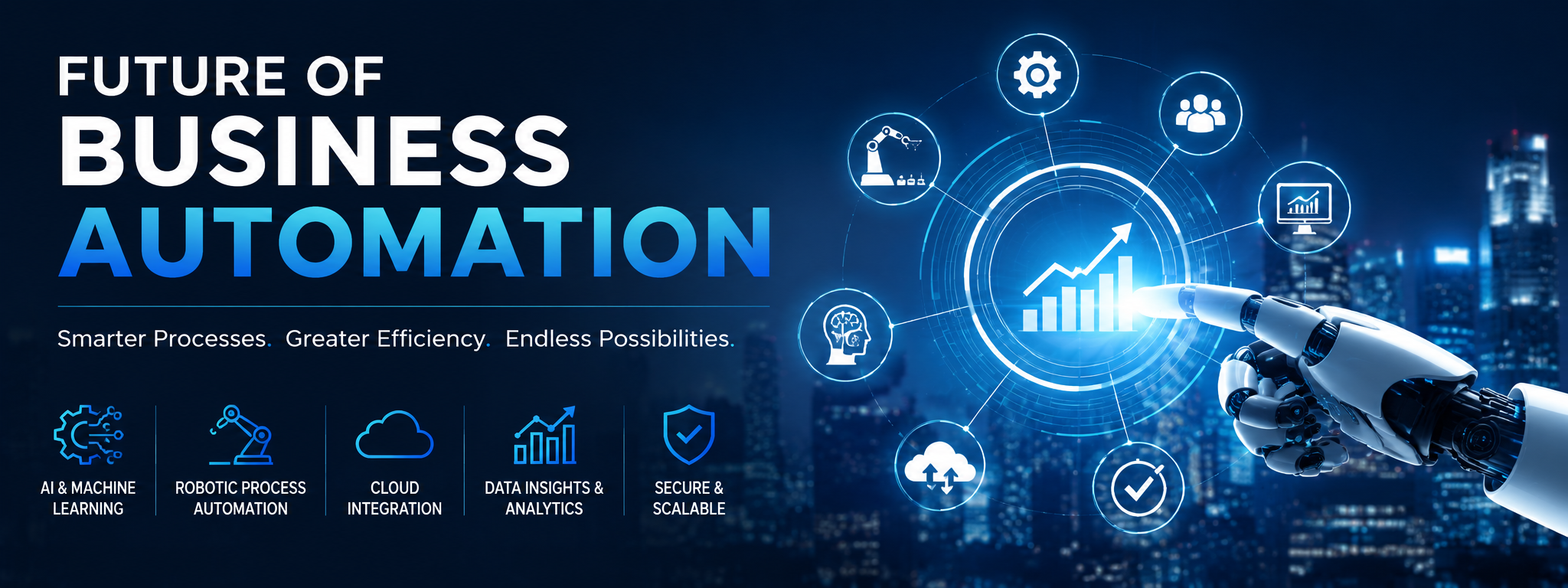
In today’s highly competitive business environment, organizations are under constant pressure to improve productivity, reduce operational costs, deliver better customer experiences, and increase profitability. One of the most effective ways to achieve these goals is through Business Automation.
Business automation enables companies to replace repetitive manual tasks with intelligent workflows powered by software, artificial intelligence (AI), machine learning, cloud computing, and robotic process automation (RPA). From startups and SMEs to multinational enterprises, automation has become a strategic investment rather than a luxury.
Whether you operate in manufacturing, healthcare, banking, retail, logistics, education, HR, finance, or IT, business automation can transform the way your organization operates.
What is Business Automation?
Business Automation is the use of technology to automate repetitive business processes with minimal human intervention.
Instead of employees spending hours performing repetitive administrative work, automation software performs these tasks automatically, allowing teams to focus on strategic activities.
Business automation can include:
- Workflow Automation
- HR Automation
- Payroll Automation
- Finance Automation
- Sales Automation
- Marketing Automation
- Customer Service Automation
- IT Process Automation
- Procurement Automation
- Invoice Processing
- Document Management
- AI Chatbots
- CRM Automation
- ERP Integration
Why Business Automation Matters
Modern businesses generate enormous amounts of data every day.
Without automation, organizations struggle with:
- Manual errors
- Delayed approvals
- Poor customer service
- High operational costs
- Inefficient workflows
- Slow reporting
- Compliance risks
- Employee burnout
Automation solves these problems while enabling faster decision-making.
Benefits of Business Automation
1. Increased Productivity
Employees spend less time on repetitive tasks and more time on innovation and customer engagement.
Examples include:
- Automatic invoice creation
- Automated payroll
- Employee onboarding
- Email workflows
- Customer follow-ups
2. Reduced Operational Costs
Automation minimizes:
- Manual labor
- Paperwork
- Processing delays
- Human errors
- Rework costs
Organizations often recover their automation investment within a short period through improved efficiency and reduced administrative expenses.
3. Better Customer Experience
Customers expect:
- Instant responses
- Faster delivery
- Accurate information
- Personalized communication
Automation enables:
- AI chat support
- Automatic ticket assignment
- Order tracking
- Customer notifications
- CRM follow-ups
4. Improved Accuracy
Manual data entry often results in:
- Duplicate records
- Wrong invoices
- Payroll mistakes
- Inventory mismatches
Automation significantly improves accuracy by standardizing workflows and reducing human intervention.
5. Faster Decision Making
Business intelligence dashboards provide real-time insights into:
- Sales
- Revenue
- Customer behavior
- Employee performance
- Inventory
- Marketing campaigns
Managers can make informed decisions based on live business data.
6. Better Compliance
Industries such as banking, healthcare, insurance, and finance must comply with strict regulations.
Automation helps maintain:
- Audit trails
- Secure records
- Document version control
- Regulatory compliance
- Approval history
Types of Business Automation
HR Automation
HR departments automate:
- Resume screening
- Interview scheduling
- Offer letters
- Employee onboarding
- Leave management
- Attendance tracking
- Payroll processing
- Performance management
Finance Automation
Finance teams automate:
- Invoice generation
- Expense approvals
- GST calculations
- Tax reports
- Vendor payments
- Purchase orders
- Budget monitoring
Sales Automation
Sales automation includes:
- Lead management
- CRM updates
- Sales pipeline tracking
- Proposal generation
- Customer follow-ups
- Opportunity management
Marketing Automation
Marketing automation tools help businesses:
- Send email campaigns
- Generate leads
- Schedule social media posts
- Track customer behavior
- Score leads
- Nurture prospects
Customer Service Automation
Automation improves customer support through:
- AI chatbots
- Self-service portals
- Automated ticket routing
- Email automation
- Live chat integration
- Customer feedback collection
IT Automation
IT teams automate:
- User provisioning
- Software deployment
- Cloud infrastructure
- Backup systems
- Security monitoring
- Incident management
Industries Using Business Automation
Business automation is transforming nearly every industry.
Healthcare
Automation supports:
- Patient appointments
- Medical billing
- Electronic health records
- Insurance claims
- Pharmacy management
Banking & Financial Services
Banks automate:
- Loan approvals
- KYC verification
- Fraud detection
- Risk analysis
- Customer onboarding
Manufacturing
Manufacturers automate:
- Production planning
- Inventory control
- Quality inspection
- Procurement
- Equipment maintenance
Retail & E-commerce
Retail businesses automate:
- Inventory management
- Order processing
- Customer support
- Warehouse operations
- Product recommendations
Education
Educational institutions automate:
- Student admissions
- Attendance
- Fee collection
- Online learning
- Exam management
Popular Business Automation Technologies
Modern automation solutions include:
- Artificial Intelligence (AI)
- Machine Learning
- Robotic Process Automation (RPA)
- Cloud Computing
- Internet of Things (IoT)
- OCR (Optical Character Recognition)
- Workflow Automation
- Low-Code Platforms
- Business Intelligence
- Data Analytics
AI-Powered Business Automation
Artificial Intelligence is taking automation to the next level.
Examples include:
AI Customer Support
Chatbots answer customer questions 24/7.
AI Document Processing
Invoices and contracts are automatically extracted and processed.
Predictive Analytics
AI forecasts:
- Sales
- Inventory demand
- Customer churn
- Equipment failures
Intelligent Email Automation
AI categorizes emails and routes them to the right department.
Business Process Automation (BPA)
Business Process Automation focuses on improving complete workflows rather than individual tasks.
Example:
Customer places order
↓
Payment verified
↓
Invoice generated
↓
Warehouse notified
↓
Shipping initiated
↓
Customer receives tracking
↓
Feedback collected
All without manual intervention.
Workflow Automation
Workflow automation connects multiple departments.
Example HR Workflow:
Job Posted
↓
Candidate Applies
↓
Resume Screening
↓
Interview Scheduled
↓
Offer Letter
↓
Document Verification
↓
Employee Onboarding
Cloud-Based Business Automation
Cloud automation provides:
- Remote accessibility
- Real-time collaboration
- Lower infrastructure costs
- Automatic updates
- Data security
- Business continuity
Popular cloud platforms include AWS, Microsoft Azure, and Google Cloud.
Business Automation for Small Businesses
Small businesses benefit significantly because automation helps them compete with larger organizations without dramatically increasing headcount.
Common automations include:
- Appointment booking
- Customer invoicing
- WhatsApp notifications
- Email marketing
- Payroll
- Inventory management
- CRM
- Online payments
Automation in Human Resources
HR automation helps reduce hiring time while improving candidate experience.
Typical HR automation includes:
- Job posting
- Resume parsing
- Candidate screening
- Interview scheduling
- Offer letter generation
- Digital onboarding
- Attendance management
- Performance reviews
- Exit management
Business Automation and Cybersecurity
As organizations automate operations, security becomes even more important.
Best practices include:
- Multi-factor authentication (MFA)
- Role-based access control
- Data encryption
- Regular security audits
- Automated backups
- Threat monitoring
- Compliance reporting
Challenges of Business Automation
Despite its benefits, businesses should plan for:
- Initial implementation costs
- Employee training
- Integration with legacy systems
- Change management
- Data migration
- Cybersecurity considerations
A phased implementation approach often delivers the best results.
How to Implement Business Automation Successfully
- Identify repetitive processes.
- Define measurable business goals.
- Select the right automation platform.
- Map existing workflows.
- Pilot automation with one department.
- Train employees.
- Integrate with existing systems.
- Monitor performance using KPIs.
- Optimize workflows continuously.
- Scale automation across the organization.
Future of Business Automation
Emerging trends include:
- AI agents handling routine business decisions
- Hyperautomation combining AI, RPA, and analytics
- Generative AI for content and document creation
- Voice-enabled workflows
- Autonomous business operations
- Predictive maintenance powered by IoT
- Advanced process mining for workflow optimization
Businesses that adopt these technologies early will be better positioned to improve efficiency and remain competitive.
Why Choose Professional Business Automation Services?
A skilled automation partner can help you:
- Analyze existing business processes
- Design custom automation workflows
- Integrate CRM, ERP, HRMS, and accounting systems
- Develop AI-powered business applications
- Automate approvals and notifications
- Build executive dashboards and reports
- Provide ongoing support and optimization
Professional implementation reduces project risk and helps ensure a faster return on investment.
Business Automation Process Services
Business automation is no longer optional—it is a key driver of productivity, profitability, and long-term growth. By automating repetitive processes, organizations can improve accuracy, reduce costs, enhance customer satisfaction, and free employees to focus on high-value work.
Whether you’re a startup looking to streamline operations or a large enterprise pursuing digital transformation, investing in business automation can deliver measurable results and create a competitive advantage in today’s fast-changing market.
How to Automate Any Business
Business Automation, Business Automation Services, Business Process Automation, Workflow Automation, AI Business Automation, Robotic Process Automation, Digital Transformation Services, Enterprise Automation Solutions, CRM Automation, ERP Integration Services, HR Automation Software, Payroll Automation, Finance Process Automation, Sales Automation, Marketing Automation, Cloud Automation, IT Automation Services, AI Workflow Automation, Business Intelligence Solutions, Process Optimization, Digital Workflow Management, Automation Consulting, Enterprise Software Solutions, Operational Efficiency, Intelligent Automation.