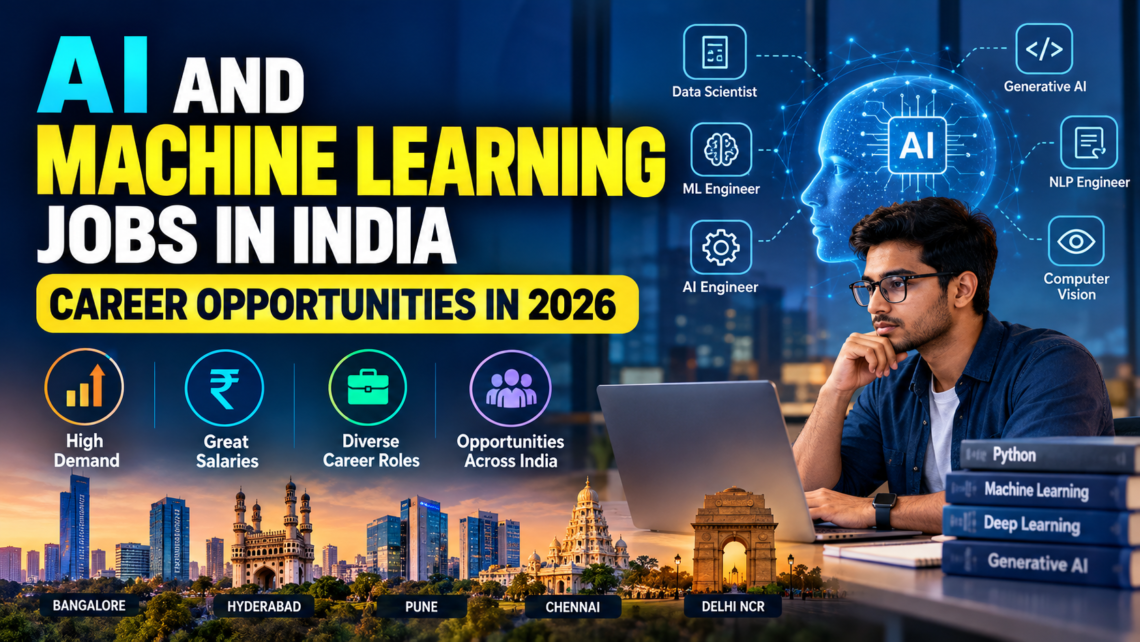
AI and Machine Learning Jobs in India: Career Opportunities in 2026
Artificial Intelligence (AI) and Machine Learning (ML) are transforming India’s technology industry. As a result, new career opportunities are emerging for fresh graduates, software developers, data professionals, and experienced IT specialists. In 2026, businesses across banking, healthcare, e-commerce, manufacturing, and technology services are exploring AI-powered solutions to improve productivity and automate operations.
Moreover, organisations are adopting Generative AI, Machine Learning, Deep Learning, Natural Language Processing (NLP), and intelligent automation. Consequently, professionals with relevant technical skills can explore opportunities across India’s expanding technology ecosystem.
For job seekers, AI and Machine Learning Jobs in India offer career paths in software development, data science, cloud computing, and enterprise AI applications. Whether you are a fresher or an experienced professional, understanding current industry requirements can help you make better career decisions.
Why AI and Machine Learning Careers Are Growing in India
India has a well-established IT services industry and a growing technology startup ecosystem. Therefore, businesses are increasingly exploring AI applications to improve efficiency, reduce repetitive work, and enhance customer experiences.
Furthermore, several developments are influencing AI recruitment across the country.
- Enterprise AI Adoption: Companies are integrating AI into customer service, business analytics, financial operations, and software development.
- Generative AI Development: Organisations are building AI assistants, intelligent search platforms, and automated document processing systems.
- Cloud-Based AI Solutions: AWS, Microsoft Azure, and Google Cloud provide infrastructure for AI model development and deployment.
- Data-Driven Decision-Making: Businesses require professionals who can analyse large datasets and develop predictive models.
- AI Product Innovation: Technology startups are developing intelligent software applications for domestic and international markets.
However, employers increasingly value practical experience alongside theoretical knowledge. Therefore, candidates who demonstrate programming skills, completed projects, and problem-solving abilities may have stronger employment prospects.
Top AI and Machine Learning Job Opportunities in India in 2026
1. Machine Learning Engineer Jobs
Machine Learning Engineers design, train, evaluate, and deploy intelligent models. In addition, they develop predictive analytics systems, recommendation engines, and automated decision-making applications.
These professionals frequently work with large datasets and machine learning frameworks. Therefore, knowledge of Python, Scikit-learn, TensorFlow, and PyTorch is valuable.
Key Skills: Python, Machine Learning, TensorFlow, PyTorch, SQL, Feature Engineering, and Model Deployment.
2. Artificial Intelligence Engineer Jobs
AI Engineers develop intelligent applications using machine learning algorithms, automation frameworks, and cloud technologies. Moreover, they integrate AI capabilities into enterprise software and digital products.
As organisations adopt Generative AI, engineers with practical experience in AI APIs and application development can explore specialised opportunities.
Key Skills: Python, Artificial Intelligence, Deep Learning, Generative AI, Cloud Computing, and Software Engineering.
3. Data Scientist Jobs
Data Scientists analyse complex datasets to identify patterns and generate meaningful business insights. Additionally, they develop predictive models that support strategic decisions.
Since organisations depend on reliable data, professionals with strong statistical and analytical skills remain important.
Key Skills: Python, SQL, Statistics, Pandas, NumPy, Machine Learning, and Data Visualisation.
4. Generative AI Engineer Jobs
Generative AI Engineers build applications using Large Language Models (LLMs), vector databases, and Retrieval-Augmented Generation (RAG).
Furthermore, they develop AI assistants, intelligent document processing systems, and automated workflows. Consequently, experience with LLM frameworks and model evaluation is valuable for these positions.
Key Skills: Python, LLMs, RAG, LangChain, Hugging Face, Vector Databases, and AI Model Evaluation.
5. Natural Language Processing Engineer Jobs
NLP Engineers develop applications that understand and process human language. For example, they build chatbots, sentiment analysis tools, multilingual systems, and intelligent search applications.
In addition, they work with transformer models and language processing frameworks.
Key Skills: Python, NLP, Transformers, Hugging Face, PyTorch, and Language Model Development.
6. Computer Vision Engineer Jobs
Computer Vision Engineers develop systems that analyse images and videos. These applications are widely explored in healthcare, manufacturing, document recognition, and industrial automation.
Moreover, professionals with deep learning and image processing experience can pursue specialised engineering positions.
Key Skills: Python, OpenCV, Deep Learning, Image Processing, and Object Detection.
7. MLOps Engineer Jobs
MLOps Engineers manage the deployment, monitoring, and maintenance of machine learning models. Additionally, they automate development pipelines and improve production reliability.
As companies move AI applications into production, expertise in cloud infrastructure and deployment tools becomes increasingly important.
Key Skills: Python, Docker, Kubernetes, MLflow, CI/CD, AWS, Azure, and Google Cloud.
8. AI Research Engineer Jobs
AI Research Engineers investigate advanced algorithms and improve machine learning models. Furthermore, they conduct experiments to develop innovative AI solutions.
However, research-focused positions often require advanced mathematical knowledge and strong technical experience.
Key Skills: Deep Learning, Mathematics, PyTorch, TensorFlow, Model Optimisation, and Research Methods.
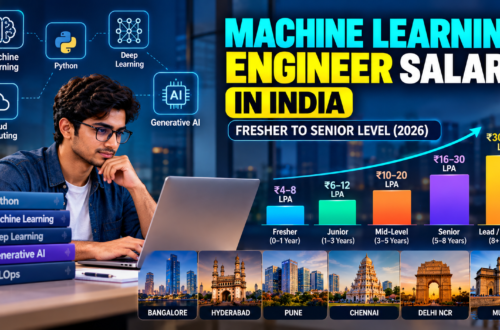
AI and Machine Learning Jobs in India by Experience Level
AI career opportunities are available across different experience levels. However, employer expectations vary depending on the complexity of the position.
Freshers and Entry-Level Professionals (0–1 Year)
Fresh graduates can explore AI internships, Machine Learning internships, Junior Data Analyst positions, and trainee development roles. Additionally, practical projects can help candidates demonstrate their technical knowledge.
Junior Professionals (1–3 Years)
Candidates with Python programming and machine learning experience can apply for Junior ML Engineer, Associate Data Scientist, and AI Developer positions. Moreover, experience with data processing and model development can strengthen their applications.
Mid-Level Professionals (3–5 Years)
Professionals with experience in developing and deploying AI applications can pursue Machine Learning Engineer, AI Engineer, NLP Developer, and Data Scientist roles. Furthermore, knowledge of cloud platforms can expand their career options.
Senior Professionals (5–8 Years)
Experienced candidates can explore Senior Machine Learning Engineer, MLOps Engineer, Lead Data Scientist, and AI Technical Lead positions. In addition, leadership and system architecture skills become increasingly valuable.
Leadership Professionals (8+ Years)
Senior specialists can pursue AI Architect, Principal AI Engineer, AI Engineering Manager, and Head of AI opportunities. However, these positions generally require strong technical expertise and demonstrated leadership capabilities.
Best Cities for AI and Machine Learning Jobs in India
AI and Machine Learning Jobs in Bangalore
Bangalore is one of India’s major technology hubs. As a result, professionals can explore opportunities in AI product development, machine learning engineering, and data science.
Moreover, technology startups, multinational companies, and software product organisations contribute to the city’s employment ecosystem.
AI and Machine Learning Jobs in Hyderabad
Hyderabad offers career opportunities in enterprise AI, cloud computing, data analytics, and intelligent automation. Additionally, the city’s established IT infrastructure supports opportunities across technology services and global capability centres.
AI and Machine Learning Jobs in Pune
Pune provides opportunities in industrial AI, predictive analytics, automotive technology, and enterprise software development. Furthermore, professionals with Python and data engineering expertise can explore relevant positions.
AI and Machine Learning Jobs in Chennai
Chennai offers opportunities across IT services, manufacturing automation, computer vision, and data engineering. Similarly, businesses exploring intelligent enterprise applications require professionals with specialised technical knowledge.
AI and Machine Learning Jobs in Delhi NCR
Delhi, Gurgaon, and Noida provide opportunities in AI consulting, financial technology, e-commerce analytics, and enterprise automation. Meanwhile, Mumbai and Kolkata also offer roles in banking technology, analytics, and software development.
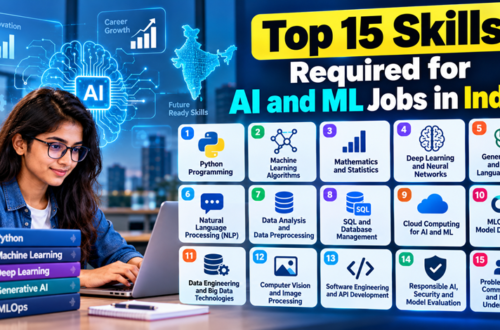
Essential Skills Required for AI and Machine Learning Jobs
Candidates need a combination of programming, mathematics, data analysis, and practical development skills. Therefore, building a strong technical foundation is essential.
Python Programming
Python is widely used in AI development because of its extensive libraries and frameworks. Moreover, knowledge of APIs, data structures, and object-oriented programming can help candidates develop complete applications.
Machine Learning Frameworks
Scikit-learn, TensorFlow, and PyTorch support the development of machine learning models. Therefore, understanding these frameworks is useful for candidates pursuing AI engineering positions.
Data Analysis and SQL
Data preparation is an important part of machine learning development. Consequently, professionals should understand SQL, Pandas, NumPy, and data cleaning techniques.
Mathematics and Statistics
Probability, statistics, linear algebra, and optimisation provide a foundation for machine learning algorithms. In addition, these concepts help professionals evaluate model performance.
Generative AI and LLM Development
Generative AI developers work with transformers, embeddings, vector databases, and RAG pipelines. Furthermore, knowledge of prompt design and model evaluation can support practical application development.
Cloud Computing and MLOps
Cloud platforms help organisations deploy and manage AI solutions. Therefore, experience with AWS, Azure, Google Cloud, Docker, and Kubernetes can improve career opportunities.
AI and Machine Learning Salary Trends in India in 2026
AI salaries in India depend on experience, technical expertise, employer, and location. Moreover, specialised positions may offer different compensation structures.
The following are illustrative annual CTC ranges for career planning rather than verified market averages.
| Job Role | Illustrative Annual Salary |
|---|---|
| Entry-Level AI / ML Engineer | ₹4–8 LPA |
| Machine Learning Engineer | ₹6–18 LPA |
| Data Scientist | ₹6–20 LPA |
| Generative AI Engineer | ₹8–24 LPA |
| NLP Engineer | ₹7–20 LPA |
| MLOps Engineer | ₹8–22 LPA |
| Senior AI / ML Engineer | ₹15–35+ LPA |
| AI Architect / Technical Lead | ₹22–45+ LPA |
However, actual salaries may fall outside these ranges. Therefore, candidates should evaluate fixed compensation, variable pay, benefits, and career development opportunities before accepting an offer.
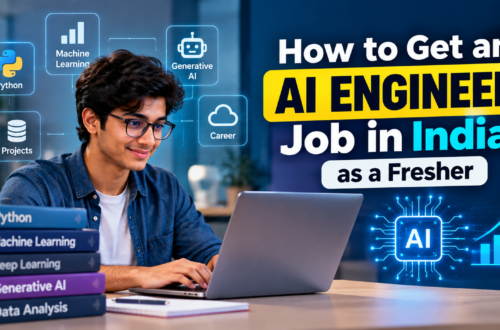
AI and Machine Learning Jobs for Freshers in India
Fresh graduates from B.Tech, BE, BCA, MCA, MSc, and related educational backgrounds can explore entry-level AI opportunities. However, employers often expect practical programming knowledge and project experience.
Therefore, candidates should develop projects that demonstrate their technical capabilities.
- Customer churn prediction using Machine Learning.
- Sentiment analysis using Natural Language Processing.
- Sales forecasting using Python.
- Image classification using Deep Learning.
- AI chatbot development using LLM APIs.
- Document question-answering using RAG.
- Machine Learning model deployment using FastAPI.
Additionally, internships, GitHub repositories, and open-source contributions can strengthen a candidate’s profile.
For example, a fresher who develops and deploys a complete machine learning application can demonstrate both programming knowledge and practical implementation skills.
Industries Offering AI and Machine Learning Career Opportunities
AI professionals work across several industries. Consequently, career opportunities extend beyond traditional software companies.
Banking and Financial Services: Financial institutions use AI for fraud detection, risk assessment, and customer analytics. In addition, automation supports operational efficiency.
Healthcare and Pharmaceuticals: AI applications include medical image analysis, clinical data processing, and research support. Moreover, machine learning helps organisations analyse complex healthcare information.
E-Commerce and Retail: Businesses use AI for recommendation engines, demand forecasting, and customer segmentation. As a result, data science and machine learning expertise are relevant.
Manufacturing and Automotive: AI supports predictive maintenance, quality inspection, and industrial automation. Furthermore, computer vision is used in specialised manufacturing applications.
IT Services and Consulting: Technology companies recruit AI professionals to develop and integrate enterprise applications. Additionally, consulting organisations require specialists who understand business requirements.
Education and EdTech: AI supports personalised learning, automated assessments, and educational applications. Therefore, developers with NLP and Generative AI experience can explore relevant opportunities.
How to Prepare for AI and Machine Learning Job Interviews
AI interviews commonly assess programming knowledge, mathematical concepts, and machine learning fundamentals. Therefore, candidates should prepare both theoretical and practical topics.
Important subjects include supervised learning, unsupervised learning, overfitting, regularisation, feature engineering, and model evaluation.
For experienced positions, interviewers may also discuss neural networks, transformers, model deployment, and production monitoring.
Additionally, Generative AI interviews may cover LLMs, embeddings, RAG architectures, hallucinations, model evaluation, and data privacy.
Most importantly, candidates should be able to explain their projects clearly. For example, discussing how a model was developed, tested, and deployed can demonstrate practical experience.
Future Scope of AI and Machine Learning Careers in India
AI technologies continue to evolve. Consequently, professionals who continuously update their skills may be better prepared for emerging career opportunities.
Several technical areas are influencing the future of AI development.
Agentic AI: Developers are exploring AI systems that coordinate tools and perform multi-step tasks. Therefore, software engineering and workflow automation skills are increasingly relevant.
Responsible AI: Organisations need professionals who understand privacy, model safety, fairness, and explainability. Moreover, AI governance is important for enterprise applications.
Multimodal AI: Applications combining text, images, audio, and video are expanding the scope of intelligent software development.
AI Infrastructure: Model serving, inference optimisation, cloud infrastructure, and monitoring are essential for reliable AI applications.
Industry-Specific AI: Healthcare, finance, manufacturing, and education provide opportunities for specialised AI solutions.
Nevertheless, long-term career growth requires continuous learning and practical problem-solving abilities.
How Cybotrix Technologies Supports AI and Machine Learning Recruitment
Cybotrix Technologies provides IT recruitment and staffing services, helping organisations identify professionals for specialised technology requirements.
Our recruitment support covers Artificial Intelligence Engineers, Machine Learning Engineers, Data Scientists, Generative AI Developers, NLP Engineers, MLOps Engineers, and related technical roles.
Furthermore, we support technology hiring requirements across Bangalore, Hyderabad, Pune, Chennai, Mumbai, Delhi NCR, and other Indian cities, depending on client requirements.
For employers, our recruitment process focuses on identifying candidates with relevant technical skills, professional experience, and project exposure.
Meanwhile, job seekers can explore suitable opportunities based on available openings, educational qualifications, and technical expertise.
Whether an organisation requires an individual AI specialist or support for a larger recruitment initiative, Cybotrix Technologies can assist with candidate sourcing and hiring coordination.
Frequently Asked Questions About AI and Machine Learning Jobs in India
Is AI and Machine Learning a good career in India in 2026?
Yes. AI and Machine Learning offer career opportunities across software development, data science, automation, and enterprise technology. However, career growth depends on practical skills, experience, and employer demand.
Can freshers get AI and Machine Learning jobs in India?
Yes. Freshers can apply for AI internships, trainee positions, and junior development roles. Additionally, practical projects and programming knowledge can improve their employment prospects.
Which programming language is best for AI jobs?
Python is widely used for AI and Machine Learning development. Moreover, SQL and other programming languages may be required depending on the position.
Which city offers AI job opportunities in India?
Bangalore is a major technology employment hub. However, Hyderabad, Pune, Chennai, Delhi NCR, and Mumbai also provide AI-related career opportunities.
What qualifications are required for AI jobs?
Many employers prefer degrees in Computer Science, Information Technology, Mathematics, or related fields. Nevertheless, relevant technical skills, projects, and professional experience can also influence hiring decisions.
What is the difference between an AI Engineer and a Machine Learning Engineer?
Machine Learning Engineers primarily develop, train, and deploy machine learning models. In contrast, AI Engineers may work more broadly on integrating AI technologies into software applications. However, responsibilities often overlap.
Conclusion
AI and Machine Learning Jobs in India in 2026 offer career opportunities for freshers, software developers, data professionals, and experienced technology specialists. Moreover, emerging technologies are creating specialised roles in Generative AI, MLOps, and intelligent application development.
However, successful AI careers require more than theoretical knowledge. Therefore, candidates should strengthen their programming fundamentals, gain practical experience, and develop meaningful technical projects.
As organisations continue adopting AI-powered solutions, professionals with relevant expertise and strong problem-solving abilities will be better prepared for suitable career opportunities.
Cybotrix Technologies supports employers and technology professionals through IT recruitment and staffing services across India’s major technology markets.